
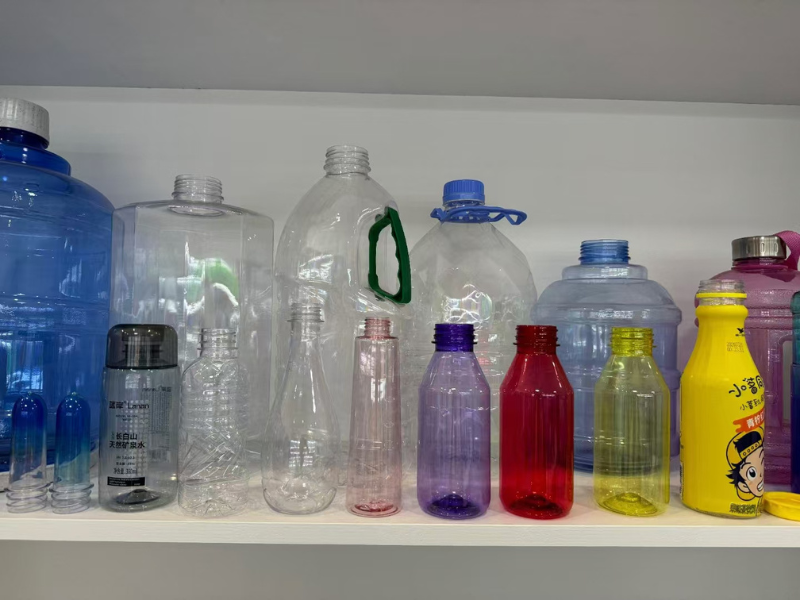
Drinking Water (Small Bottles and 5-Gallon Containers)
Water packaging is one of the largest application areas for PET preforms, and it naturally divides into two key segments: small bottled water and bulk 5-gallon containers. Each requires a very different preform approach.
Small Bottled Water
Lightweight preforms of 18–22 g with 29/25 neck are the global standard for 500 ml bottles. For premium brands or e-commerce packaging, designs can be pushed lighter (16–17 g) if wall thickness distribution is optimized. This allows cost savings without risking deformation in transport or on the shelf.
5-Gallon Bottled Water
Heavy-duty preforms weighing 350–450 g with 55 mm or 58 mm neck are designed for bulk water dispensers. These must endure multiple reuse cycles, higher stacking loads, and strict hygiene standards. For drinking water applications, certified 100% virgin PET resin is mandatory to guarantee safety and durability.
Beverage Industry (Carbonated, Tea, Functional Drinks, and Juices)
Beyond water, PET preforms are indispensable in the beverage sector. This category includes carbonated soft drinks, iced teas, energy drinks, and juices—each with its own requirements for wall strength, clarity, and neck compatibility.
Carbonated Soft Drinks
Carbonated beverages demand PCO 1881 (28 mm) finishes reinforced for pressure resistance. A standard 0.5 L soda bottle uses 28–35 g preforms, which must withstand 0.2–0.3 MPa internal pressure while staying lightweight enough for cost efficiency.
Tea and Functional Drinks
These often involve semi-hot filling. Preforms must be heat-resistant, typically weighing 30–34 g for 500 ml bottles, with 38 mm necks that support wider caps and smooth product flow.
Juices
Fruit juices require strong oxygen barriers to protect freshness. Preforms with 38 mm necks and tamper-evident closures are common, designed for short-time pasteurization up to 85°C. A 1 L juice bottle generally relies on 28–32 g preforms, balancing strength with cost.
PET in the beverage industry offers flexibility across sub-sectors while ensuring filling line compatibility. Matching the correct neck finish and weight to the product type not only ensures safety but also optimizes resin use. For a deeper overview of neck options, explore our guide on pet preform neck types.
Edible Oil and Condiments (Cooking Oils, Sauces, and Vinegars)
The edible oil and condiment sector covers a wide range of products—from cooking oils like soybean or sunflower to thicker sauces and table vinegars. Each requires PET preforms that can guarantee leak-proof storage, tamper resistance, and durability across long supply chains.
Cooking Oils
For edible oils, wide-mouth preforms are the standard. 45/39 or 48/41 neck types paired with tamper-evident closures are common, ensuring clean pouring and safe storage. A 1 L oil bottle typically uses a 28–35 g preform, while larger 5 L containers demand 90–120 g preforms with reinforced bases.
Soy Sauce and Vinegar
These condiments often require smaller bottles for both retail and food service. Preforms with 28 mm necks in the 18–22 g range provide enough strength while remaining cost-efficient. For larger formats, a 38 mm neck is chosen to allow smooth liquid flow.
Thicker Sauces (e.g., Ketchup, Chili Paste)
PET preforms for viscous sauces require greater wall strength and compatibility with pump or squeeze closures. 38 mm or custom 40 mm neck types are often specified, with preforms weighing 25–35 g for 500 ml–1 L bottles. These ensure bottles maintain shape during squeezing without cracks or collapse.
Compared with glass, PET reduces shipping weight by more than 70%, making it especially competitive in export markets. For procurement managers, choosing the right preform neck not only ensures functionality but also directly lowers freight cost per container.
Cosmetics and Personal Care (Shampoos, Lotions, and Skincare)
This sector is highly diversified, covering shampoos, conditioners, body lotions, liquid soaps, and premium skincare products. Each category demands PET preforms that combine durability with aesthetics, ensuring compatibility with a wide variety of closure systems.
Shampoos and Conditioners
Haircare bottles often require strong neck finishes that support pump heads. The most common are 28 mm or 40 mm neck types, with preforms ranging 25–35 g for 500 ml–1 L formats. A flat sealing surface and precise neck tolerance are critical to prevent leaks during repeated use.
Lotions and Body Care
Lotions and moisturizers typically use 28 mm flip-top or disc-top closures. For premium packaging, transparent or lightly tinted preforms of 20–25 g for 250–500 ml bottles provide both elegance and chemical resistance.
Liquid Soaps
Household and personal-use liquid soaps often need wider necks, such as 38 mm, to support pumps or sprayers. Preform weights vary from 25–40 g depending on bottle size (500 ml–1 L).
Skincare and Premium Products
For facial serums, toners, and cosmetics where brand image is paramount, lightweight preforms (10–15 g) with custom neck types are favored. These allow sleek, small-volume bottles that support fine mist sprayers or droppers.
By selecting the right preform neck type and weight for each cosmetic product, buyers ensure packaging not only protects the formula but also enhances consumer perception at the retail level.
Household and Industrial Chemicals (Detergents, Cleaners, and Solvents)
This category covers a wide span of products, from everyday household detergents to industrial-grade disinfectants and solvents. Unlike beverages or cosmetics, chemical packaging focuses less on visual clarity and more on strength, leak prevention, and resistance to aggressive substances.
Household Detergents and Fabric Softeners
For liquid laundry products and softeners, buyers often select 28 mm or 40 mm neck types compatible with flip-top or dosing caps. Preforms usually weigh 35–55 g for 1–2 L bottles, with thicker walls to prevent stress cracking during repeated use. In this segment, opaque PET is common—especially white or colored bottles that align with brand image and shield active ingredients from light.
Surface Cleaners and Disinfectants
Spray bottles for disinfectants or glass cleaners generally require 28 mm PCO or custom spray neck types, supporting trigger sprayers. Preforms are typically 20–30 g for 500 ml–750 ml bottles. Since these products often contain alcohol or surfactants, chemical resistance and precise neck sealing are essential to avoid leakage.
Industrial Solvents and Chemicals
Large-volume solvents, acids, or industrial cleaners demand wide-mouth preforms—commonly 45 mm to 55 mm neck finishes—for 3–5 L containers. These preforms can weigh 80–150 g, ensuring safe handling and stable stacking in warehouses. Buyers in this category also frequently request UV-stabilized PET or barrier additives that extend shelf life and protect against degradation.
Conclusion
PET preforms are versatile across beverages, food, healthcare, cosmetics, chemicals, and even pet care and agriculture. Each sector relies on specific neck diameters, weights, and resin options to balance product safety, filling efficiency, and cost.
At Enlightening Plast, we supply over 700 mold options covering every major PET preform neck type, from PCO finishes for water and CSD to wide-mouth and custom cosmetic designs. Whether you need ultra-light preforms for bottled water or thick-wall solutions for agrochemicals, our team delivers consistent, certified, and tailored support. Share your application and target budget with us—we’ll recommend the most suitable preform design to secure quality, reduce costs, and streamline your packaging supply chain.