
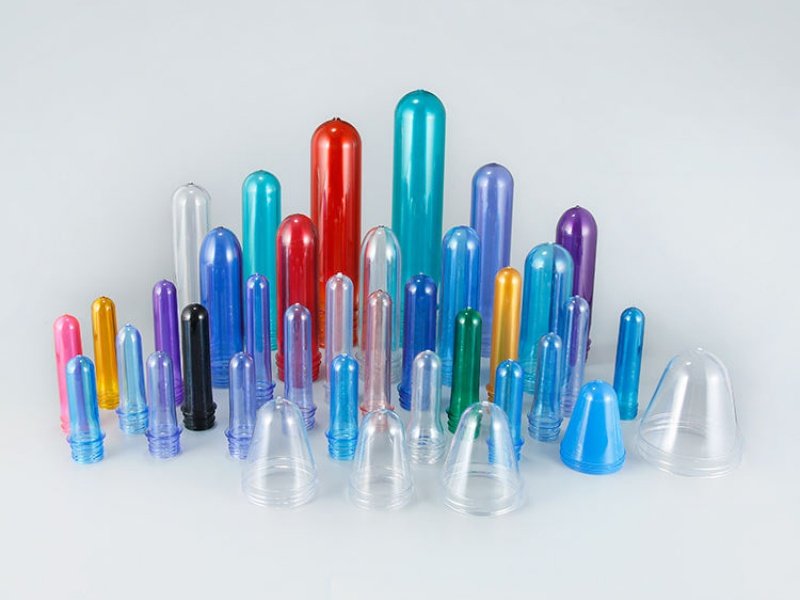
PET preform neck types are the specifications of the bottle mouth section of a PET preform (the semi-finished product used for blow-molded bottles). The standard covers four key dimensions: thread shape, mouth diameter, sealing structure, and support ring design. Common examples include the 28mm standard thread or the 38mm tamper-evident thread, each classified as a different neck type.
Why do they matter? Because the neck finish ultimately decides whether the bottle can be used, whether the filling line runs smoothly, and whether your costs stay under control. In short, it is not a “minor detail” but the core prerequisite for product usability, production efficiency, cost management, and compliance. Overlooking it almost guarantees problems—leaks on the shelf, machine stoppages during peak season, or rejections due to non-compliant packaging.
This guide will walk you through the most common neck types, how they affect cap compatibility and performance, and what to check before sourcing. You’ll also find insights on manufacturing precision, certification, and sustainable choices like R-PET.
What Are the Key Dimensions of a Preform Neck?
When you look closely at any PET preform, the neck is not just a simple opening—it is a precisely engineered area defined by four main dimensions. Each dimension controls how the cap fits, how the filling line runs, and how the final bottle performs. Let’s walk through these dimensions step by step, while also noting the sealing surface that secures product integrity and the support ring that keeps every bottle stable on the line.
T-Dimension (Thread Outside Diameter)
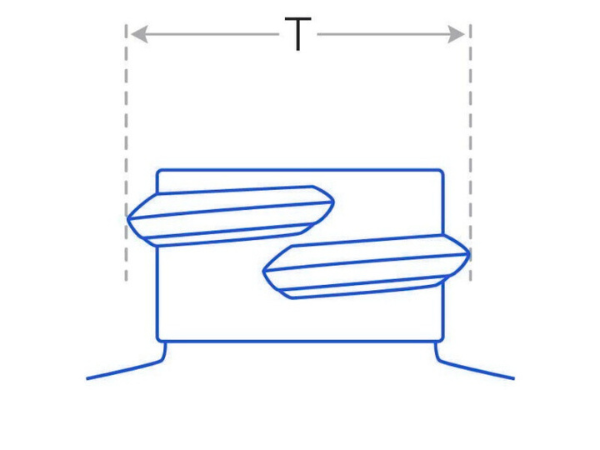
The T-dimension is the outer diameter of the neck thread. It must align with the cap’s inner thread: too large, caps won’t fit; too small, seals loosen and leak.
Tolerance is tight—often ±0.1–0.2mm. A PCO1810 preform allows only ±0.13mm. Even this margin, if missed, can shut down a capping line or breach compliance.
Size varies by use: 28mm for small beverages, 55mm for 5-gallon water jugs. The rule is simple—match the T-dimension to product type, cap spec, and line setup, never by guesswork.
E-Dimension (Neck Inside Diameter)
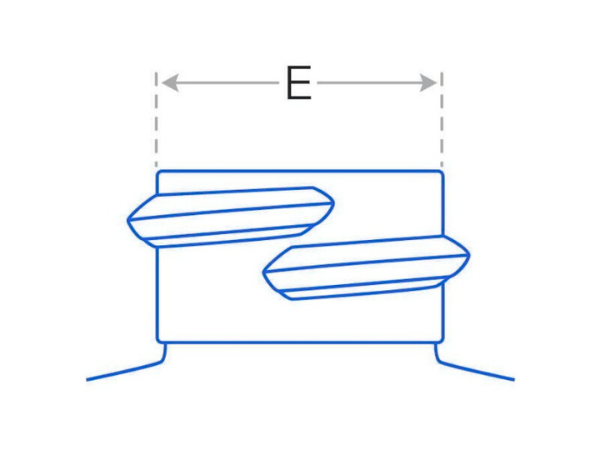
The E-dimension is the inner diameter of the neck. It dictates fill speed and pourability—bigger E for faster filling and smoother flow, especially in large-volume bottles.
It pairs with the T-dimension: (T–E)/2 gives thread depth, the key to secure cap engagement. Any imbalance means closure failure.
Tolerances run ±0.1–0.3mm, and with plug-seal caps, precision is non-negotiable. Too wide and it leaks; too narrow and the plug won’t seat.
H-Dimension (Neck Height)
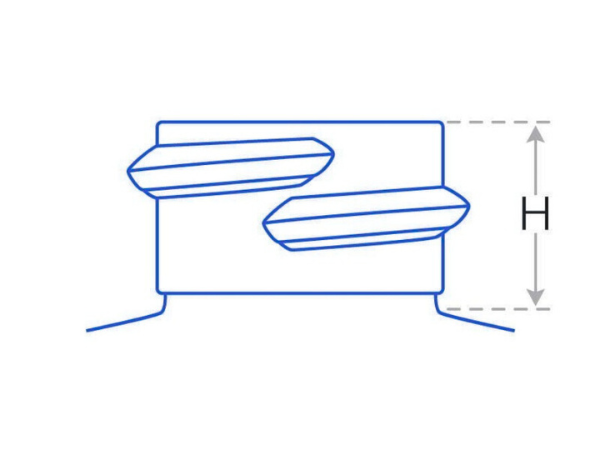
The H-dimension is industry-defined as the vertical distance from the top sealing surface to the reference line of the T-diameter (max thread O.D.). From there it extends down to the shoulder. This value sets overall neck height, controls cap fit and thread engagement, and dictates both seal integrity and bottle appearance.
Thread Type (Shape and Pitch)
The sealing surface is the contact zone between the preform neck and the cap that creates the seal. Its geometry is critical—typically flat or conical, with flat finishes used on common water bottles. This area must be perfectly smooth; any defect causes leaks, gas loss, or contamination.
The dimensions must also align precisely with the cap’s sealing structure, with tolerances usually within ±0.1mm, to ensure a tight, stable closure that protects food, beverage, pharma, or personal care products throughout their shelf life.
Sealing Surface (Closure Contact Area)
This is the flat or curved area where the cap meets the neck to form a seal. Its diameter, angle, and finish quality decide whether carbonation holds or hot-fill products stay safe. Even microscopic flaws here can translate into leaks, recalls, and lost shelf life.
Support Ring (Handling and Positioning)
The support ring sits just below the neck and anchors the bottle during filling and capping. It ensures bottles stay steady at high speed and prevents deformation. A poorly designed or off-spec ring can jam star wheels, delay production, or cause breakage.
Together, these six dimensions form the foundation of every neck design, and once you understand them, it becomes much easier to compare the most common PET preform neck types.
What Are the Most Common PET Preform Neck Types?
Once the six neck dimensions are clear, the next step is knowing which neck types dominate the market, so you can quickly match your product with the right global standard.
| Neck Type (Category) | Neck Type / Model (Specific Types) | Diameter (mm) | Core Structural Features | Global Applications | Compatible Closure Types | Key Industry Standards / Certifications |
|---|---|---|---|---|---|---|
| PCO | PCO 1810, PCO 1881, PCO 3025 | 28, 30 | Tamper-evident threads, conical sealing, pressure reinforcement | Carbonated drinks, juices | Tamper-evident screw cap with liner | ISO 12810, ISBT PCO Standard |
| ROPP | ROPP | 28, 30 | Roll-on Pilfer-Proof thread design, sealing by aluminum cap | Alcohol, olive oil, pharma | Aluminum tamper-evident cap | ISBT, FDA Hot-fill Guidelines |
| Wide Mouth | 38mm, 46mm, 63mm, 70mm, 89mm | 38–89 | Wide opening, multi-start threads, reinforced sealing | Juices with pulp, dairy, hot-fill | Wide-mouth screw caps | ISBT, FDA Hot-fill Guidelines |
| GME | 26/22 GME 30.37, 26/22 GME 30.40 | 26 | Fine thread, single or double support ring, flat sealing | Pharma, oral solutions, small cosmetic packaging | Inner plug seal caps | GME 30.37, GME 30.40 (Germany) |
| Hot Fill | 28mm Hot-Fill, 38mm Hot-Fill | 28, 38 | Crystallized neck for heat resistance, thicker sealing surface | Juices, teas, high-temperature liquids | Hot-fill tamper-evident cap | ISO 15750 |
| Press Type | 32mm Press Type | 32 | Press-to-open, locking thread, silicone sealing surface | Edible oils, sauces | Press-type tamper-evident cap | ISO 15750 |
| 5-Gallon | 55mm 5-Gallon | 55 | Heavy-duty thread, thickened sealing surface, high torque resistance | Bulk water bottles | Press-on or screw-on caps with handle | IBWA 5-Gallon Bottle Standards |
Below, let’s break down some of the most important preform types in detail!
PCO Preform Types
PCO Preform Types are named after the Plastic Closure Organization (PCO), which set globally recognized standards for PET preform neck finishes—covering dimensions, threads, and sealing structures. Within this category, several core models have become the dominant choices in beverage packaging worldwide.
For instance, PCO 1810 is widely used in standard 500–600ml carbonated drinks, while PCO 1881 evolved as a lighter, high-speed option for 500–1000ml water and tea bottles, each with distinct neck geometry and sealing profiles. Please see our full table of popular PCO types below.
| PCO Model | Diameter (mm) | Core Structural Features | Core Application Regions | Typical Product Types | Filling Line Compatibility |
|---|---|---|---|---|---|
| PCO 1810 | 28 | Short-neck design, reinforced against internal pressure, conical sealing | Global (Europe, Asia-Pacific) | 500–600ml standard CSDs (cola, lemon-lime sodas) | Mid–high speed lines (300–500 BPM) |
| PCO 1881 | 28 | Tall-neck, tighter thread pitch, double-contact sealing | Global (Middle East, Africa) | 500–1000ml bottled water, ready-to-drink teas | High-speed lines (500–800 BPM) |
| PCO 3025 | 30 | Extended neck, wide-pitch threads, thickened support ring | Europe, Southeast Asia | 1.5–2L family-size CSDs | Mid–low speed lines (150–300 BPM) |
| PCO 2925 | 29 | Short neck, narrow-pitch threads, lightweight design | Japan, niche European markets | 330–500ml sparkling water, flavored sodas | High-speed lines (600–800 BPM) |
| PCO 1668 | 16 | Ultra-small diameter, fine threads, low neck height | Global portable beverage sector | 100–200ml mini CSDs (kids’ sparkling drinks) | Ultra-high speed lines (800–1200 BPM) |
| PCO 3840 | 38 | Tall neck, heavy-duty support ring, pressure-resistant | North America | 2–3L extra-large CSD bottles | Low-speed lines (80–150 BPM) |
| PCO 2250 | 22 | Short neck, single-contact sealing surface, low torque opening | Global mid–low capacity drinks | 200–300ml lightly carbonated juices | Mid–high speed lines (400–600 BPM) |
ROPP Preform Types
ROPP (Roll-On Pilfer-Proof) necks are widely used whenever tamper evidence is essential, especially in spirits, edible oils, and premium condiments. The neck finish is designed with a rolling groove so that, during capping, the aluminum closure is rolled tightly into place to lock the seal. At the same time, the tamper band is engineered to snap on first opening, giving consumers a clear visual sign of integrity. In our experience, 28mm is most common for mini spirits, 30mm for edible oils, and 38mm for wines—each matched with the proper sealing surface and liner to ensure reliable freshness and product safety.
| ROPP Model (Diameter) | Core Structural Parameters | Product Capacity Range | Main Global Applications | Material Compatibility | Sealing & Tamper-Evident Features |
|---|---|---|---|---|---|
| ROPP 24mm | Groove depth 1.2mm, single tamper band, flat sealing surface | 10–50ml | Oral solutions, mini spirits (RTDs) | PET, Glass | Food-grade silicone liner, tamper band break force ≥5N, leak-proof |
| ROPP 28mm | Groove depth 1.5mm, dual tamper bands, micro-conical sealing surface | 50–200ml | Mini white spirits (50ml samples), seasoning oils | PET, HDPE | Foam PE liner, internal pressure resistance 0.1MPa, visible tamper evidence |
| ROPP 30mm | Groove depth 1.8mm, single tamper band, stepped sealing surface | 200–500ml | Soy sauce, vinegar, mid-range wines (375ml) | PET, Glass | Butyl rubber liner, sealing contact ≥15mm², acid/alkali resistance |
| ROPP 38mm | Groove depth 2.0mm, reinforced tamper band, wide sealing surface | 500ml–1L | 1L edible oils, red wine (750ml), bulk sauces | PET, HDPE | Metal composite liner, strong tamper band impact resistance, high-speed roll-on compatible |
| ROPP 43mm | Groove depth 2.2mm, dual support rings + tamper band, concave sealing surface | 1–2L | Blended oils, food-grade industrial cleaners | HDPE (preferred), PET | Solvent-resistant liner, neck wall thickness ≥2.5mm, high load capacity |
| ROPP 50mm | Groove depth 2.5mm, heavy-duty tamper band, dual sealing surfaces | 2–5L | 5L edible oil, bulk honey | HDPE | Multi-layer liner, irreversible tamper band break, excellent leak resistance |
Wide Mouth Preform Types
Wide Mouth Preform refers to PET preforms with a neck diameter of 38mm or larger, designed for wide-mouth closures. They are widely used in containers where easy filling, pouring, or scooping is essential—think honey jars, jam bottles, nut canisters, baby food jars, sports bottles, and even large 18.9L water jugs. The most popular types are grouped by diameter and application, as shown below:
| Wide Mouth Type | Diameter (mm) | Core Structural Features | Typical Capacity Range | Global Applications | Preform Weight Range |
| 38mm Standard Wide Mouth | 38 | Standard wall thickness, flat sealing surface | 500ml–1L | Food jars, baby food, small jam bottles | 12–20g |
| 48mm Reinforced Wide Mouth | 48 | Thickened neck wall, larger sealing surface | 1–2L | Edible oil, liquid condiments | 25–35g |
| 55mm Bulk Water Wide Mouth | 55 | Heavy-duty neck, reinforced support ring | 18.9L (5-gallon) | Bottled water (dispenser jugs) | 60–80g |
| 63mm Extra-Large Wide Mouth | 63 | Wide pitch thread, dual support rings | 2–5L | Grains, dry foods, industrial wide-mouth bottles | 35–45g |
GME Preform Types
GME (26/22 Series) was established by the German Mechanical Engineering Association to standardize PET preform necks. The “26” refers to the outer neck diameter (~26mm) and “22” to the inner diameter (~22mm). With fine-thread design, lightweight structure, and precise sealing compatibility, it is widely applied in small to mid-size PET bottles where accuracy and portability matter. In Europe, this series is common for 330–500ml water bottles, 200–300ml sports drinks, 100–150ml kids’ beverages, and even cosmetic samples or oral solution bottles. The most popular types are summarized below:
| GME Type | Core Structural Features | Typical Capacity Range | Global Applications | Preform Weight Range |
| GME 30.37 | Single support ring, flat sealing surface | 300–500ml | Still water, basic soft drinks | 13–18g |
| GME 30.40 | Dual support rings, sealing surface with positioning bump, anti-misfit | 200–500ml | Functional drinks, oral solutions | 15–20g (for high-speed lines or chilled storage) |
| GME 30.45 | Tamper-evident ring design for anti-counterfeiting | 100–300ml | Health drinks, small condiments, pharma | 8–12g |
Hot Fill Preform Types
Hot Fill Preform is engineered for high-temperature filling processes, with crystallized PET structure and reinforced neck/body areas that withstand 85–95°C. Unlike cold-fill preforms, which deform under heat, hot-fill designs maintain shape and sealing performance during filling and storage. They are widely used for juices, teas, herbal drinks, and concentrated broths. Below are the most common types:
| Hot Fill Type | Diameter (mm) | Heat Resistance | Typical Capacity Range | Global Applications | Preform Weight Range |
|---|---|---|---|---|---|
| 28mm Standard Hot Fill | 28 | 85–90°C | 500–600ml | Juices, teas, herbal drinks | 18–22g |
| 38mm Wide-Mouth Hot Fill | 38 | 90–95°C | 1–1.5L | Broths, sauces, family-size hot drinks | 25–35g |
| 24mm Slim Hot Fill | 24 | 85–90°C | 200–300ml | Kids’ juices, small hot drinks | 12–18g |
5-Gallon Preform Types
5-Gallon Preform is designed exclusively for 18.9L water dispenser bottles, with heavy-duty neck finishes and reinforced body structures to handle transport stress and repeated reuse.
Most designs adopt a 55mm neck finish as the global standard for dispenser compatibility, but within this size there are different structural variants—such as tamper-evident threads, dual support rings, or reinforced food-grade finishes. The common options are shown below:
| 5-Gallon Type | Diameter (mm) | Core Structural Features | Main Applications | Typical Weight Range |
| 55mm Tamper-Evident Thread | 55 | Standard anti-theft thread design, secure sealing | Global bottled water (18.9L) | 60–80g |
| 55mm Dual Support Ring | 55 | Reinforced dual support rings for stability | Southeast Asia markets | 70–90g |
| Food-Grade Reinforced | 55 | Thickened wall, premium grade for high-end water | Premium/mineral water brands | 80–100g |
Which Neck Types Suit Different Products?
If you’ve gone through the dimensions and types but still feel unsure how to match a preform to your filling line, don’t worry—here’s a quick reference we always share with buyers.
Still & Mineral Water
- Standard bottled water: 29/25 or 30/25 lightweight finishes are best, reducing resin use while ensuring seal integrity.
- Premium spring water: GME 30.37 is often preferred for higher precision and portability.
Carbonated Drinks
- Cola, lemon-lime sodas: PCO 1881 is the industry standard for high-speed lines, while PCO 1810 remains in use for legacy equipment.
- Sparkling water: PCO 2925 works well for smaller bottles where lightweighting matters.
Juices & Dairy
- Juice with pulp / smoothies: 38mm wide-mouth or 2-start thread finishes make pouring easy and prevent clogging.
- Dairy bottles (yogurt, flavored milk): 38mm hot-fill finishes handle pasteurization heat and thicker textures.
Edible Oils & Condiments
- Cooking oil (0.5–2L): 30mm or 38mm ROPP finishes with tamper-evident bands are reliable for both sealing and consumer trust.
- Sauces & vinegar: 30mm ROPP with stepped sealing surfaces offers spill-proof performance.
Large Format Water
- 5-Gallon dispenser bottles: Always 55mm necks, but you should select between tamper-evident, dual support ring, or reinforced food-grade designs depending on transport and reuse cycles.
Cosmetics & Household
- Lotions, shampoos, detergents: 24/410 or 28/410 neck finishes support pumps and sprayers.
- Pharma / oral solutions: GME 30.40 with positioning bumps ensures precise sealing with plug caps.
Should You Choose Standard or Custom Neck Designs?
Most of the time, standard preform designs are enough. They cover common applications, require no mold investment, and keep your short-term cost and risk low.
But if you need brand differentiation—whether it’s custom colors, special surface effects like frosted or opaque, unique cap structures, or additives for challenging storage conditions—that’s when custom preforms become necessary.
Of course, custom means paying for mold development upfront, but with high volumes and added product value, the total cost of ownership (TCO) can be more favorable long-term.
What matters most is choosing a supplier that can truly simplify this process. With Enlightening Plast’s one-stop service—preforms, closures, molds, and export logistics all in one place—you cut out extra hand-offs, reduce miscommunication, and keep delivery risk under control.
Partner With a PET Preform Manufacturer You Can Trust
By now you’ve seen how neck types, preform dimensions, and design choices directly impact not only product performance but also long-term costs and brand value. The takeaway is simple: standard designs keep you safe and cost-efficient, while custom solutions unlock brand differentiation and higher margins when done right.
As a PET preform manufacturer, our role is to help you navigate these options with clarity and confidence. We don’t just sell preforms—we support you across the full process:
- Evaluate your needs – match your application, filling process, and budget.
- Recommend the right fit – select the most suitable neck type and preform weight.
- Offer customization – provide color options, mold development, and matching closures or handles.
- Simplify logistics – integrate manufacturing + closures + molds + export delivery into one streamlined supply chain.
- Control costs – cut out unnecessary spending while ensuring durable, reliable products for long-term use.
So the real question is: are you ready to remove uncertainty from your supply chain and gain a partner who understands both your technical and business goals?
👉 Talk to our team today. Share your intended application and target budget, and we’ll prepare a precise quotation and tailored preform recommendation—helping you achieve the right balance of performance, cost, and long-term reliability.
Our WhatsApp: +86 15650168312
Our Email: steve@cnbuckets.com