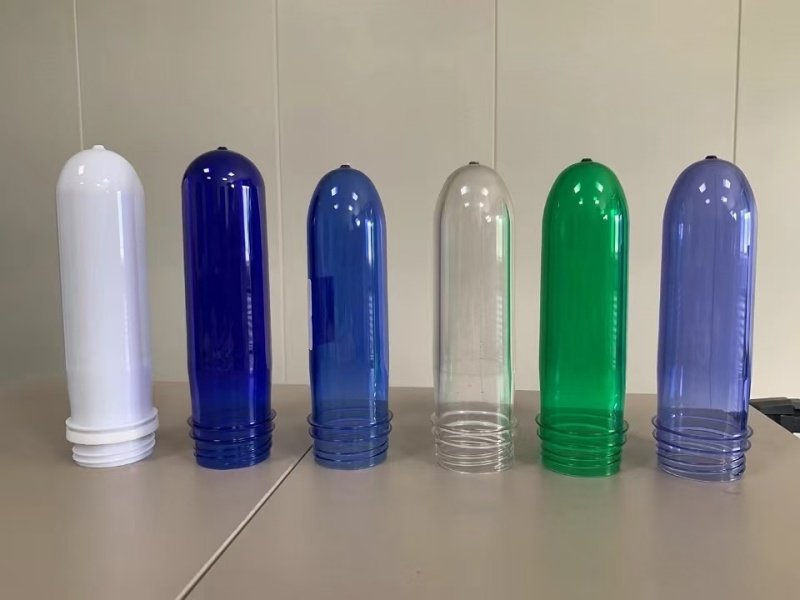
Not all preform materials are suited for lightweighting. Glass preforms? Not practical. Polycarbonate? Limited options.
But PET preforms are leading the way, and it’s hard to ignore the shift. From 500ml water bottles to 2-liter soda containers, the weight of PET preforms is dropping across the board.
This shift isn’t new—PET preform lightweighting has been evolving since around 2009-2010, when manufacturers began focusing on reducing weight through design and material innovations.
In this article, we’ll break down what lightweighting really means, why it matters for your bottom line, how it’s achieved in production, and what you should watch out for when ordering. Keep reading to discover how lighter preforms could be the game-changer your product line needs.
What Is a Lightweighted PET Preform?
Lightweighting a PET preform isn’t just about making it “thinner”—that would compromise everything. What we’re talking about is a calculated reduction in material usage while maintaining (or even improving) performance, structural strength, and blow molding stability. Think of it as precision engineering: you remove excess material from low-stress areas and reinforce critical zones like the neck finish and base. The result? A preform that’s 10-20% lighter, yet still holds up to the same burst pressure, drop resistance, and production standards. It’s smarter design, not cutting corners.
Why Is Lightweighting an Industry Trend?
The reason is simple: everyone wins. As a PET preforms manufacturer, lightweighting lets us cut raw material costs by 8-15% per unit—multiply that across millions of preforms annually, and the savings become impossible to ignore. For you, as a buyer, this means lower freight costs (lighter shipments), faster production cycles, and the added bonus of a sustainability story that resonates with your customers.
At the same time, environmental regulations are tightening up. The EU’s Single-Use Plastics Directive requires a minimum amount of recycled content and sets packaging reduction goals. China’s updated plastic bans are pushing manufacturers to improve material efficiency. Even major brands like Coca-Cola and Nestlé are stepping up their sustainability efforts, which is increasing demand for lighter packaging. So, in today’s market, offering lightweight preforms isn’t just a competitive advantage—it’s quickly becoming a must-have.
How Is PET Preform Lightweighting Achieved?
Design to Remove Unnecessary Material
Lightweighting starts with the design phase. One of the best methods is to analyze stress distribution across the preform using tools like finite element analysis (FEA). For example, the sidewalls of the preform are less stressed than areas like the neck threads, so these can often be thinned by 0.2-0.3mm without compromising performance. To keep the neck area strong, it’s crucial to reinforce it since any deformation here can affect the seal with the cap. If you’re using a standard neck design, switching to a lightweight version of the neck finish can save resin while maintaining integrity.
Use Stronger and Lighter Materials
Selecting the right materials plays a big role in lightweighting. Stronger PET resins, like high-IV PET (intrinsic viscosity ≥0.80 dL/g), can help achieve a thinner preform without sacrificing strength. Another option is incorporating recycled PET (rPET), which is an excellent way to lower material costs and reduce environmental impact. For non-food applications, up to 25% rPET can be used, while for bottled water, we recommend keeping rPET content under 15%. By using rPET at controlled ratios, you can significantly reduce reliance on virgin resin.
Ensure Precision in Molding for Consistency
When you’re aiming for lightweight PET preforms, precision molding is key. Lightweighting leaves less room for error, so achieving tighter tolerances is essential. For instance, at Enlightening Plast, we ensure our molds are machined with a tolerance of ±0.05mm, and we perform trial cycles to check that wall thickness distribution stays within a 5% variance. A deviation of just 0.1mm in a 15-gram preform can result in weak points or inconsistent blowing, so attention to detail here is critical.
Adjust the Production Process for Thinner Walls
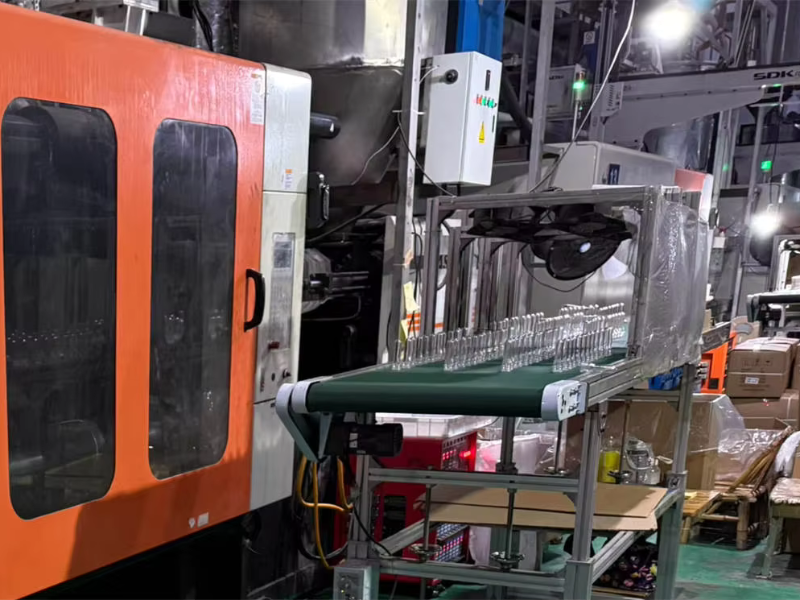
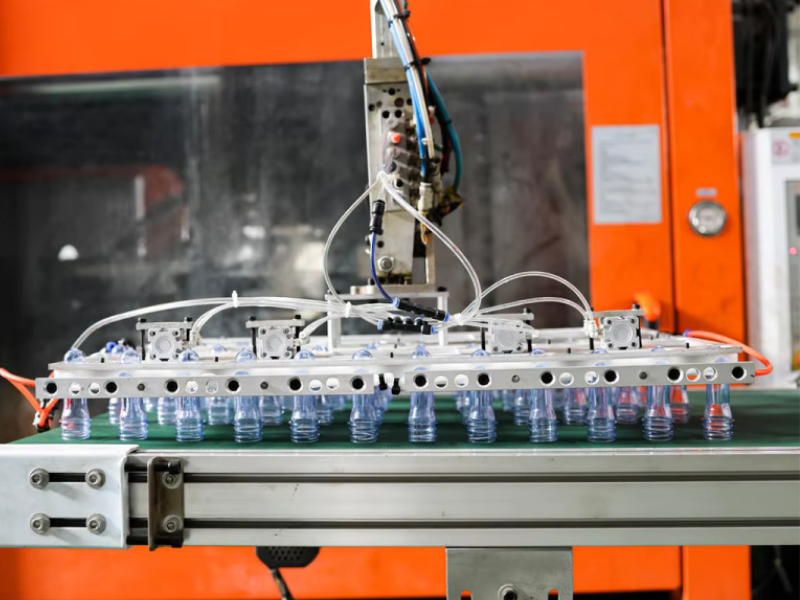
Finally, adjustments to the injection molding process are needed for thinner preforms. Since lightweighted preforms cool faster due to reduced wall thickness, it’s important to fine-tune the cooling and demolding times to prevent defects, such as crystallization (those white, brittle spots near the neck). At Enlightening Plast, we monitor our 60+ injection machines closely, with our experienced QC team overseeing every batch to ensure consistency. Whether it’s the first preform or the ten-thousandth, we make sure each one meets the same high standard.
What Should You Check When Ordering Lightweighted Preforms?
Before committing to a bulk order, request sample preforms from your manufacturer—Enlightening Plast included. Lightweighted preforms are more sensitive to defects, so you’ll want to inspect these key areas yourself:
Neck finish quality is where most issues show up. Check the threads under good lighting—are they sharp and complete, or do you see flashing (excess material) or incomplete thread depth? Run your finger along the sealing surface; any rough spots mean the mold needs maintenance. Also look for crystallization: if the neck area appears cloudy or whitish instead of crystal-clear, the cooling process was rushed.
Wall thickness uniformity matters more in lighter preforms. If you have calipers, measure the sidewall at three points (top, middle, base). Variations beyond 0.15mm suggest inconsistent injection pressure, which will cause uneven blowing later.
If you’re considering rPET-blended lightweighted preforms, confirm two things with your supplier:
- The PET resin grade
- The rPET ratio
For bottled water applications, keep rPET content under 15% to maintain clarity and strength. For cleaning products or non-food uses, you can go higher—but always ask for a material spec sheet.
Below, we’ve summarized the typical rPET ratios used in different types of preforms:
| Preform Type | Max rPET Ratio | Application |
| Bottled Water | 15% | Water bottles (clarity & strength) |
| Non-Food Products | 25% | Cleaning products, detergents |
| Juice & Tea Bottles | 15-20% | Beverages like juice, tea |
| Cosmetic Products | 20% | Cosmetics, lotions |
| Chemical Packaging | 25-30% | Chemicals, industrial products |
| General Packaging | 30% | Household and other packaging |
In addition to checking the rPET ratio, there are a few other key factors to consider when ordering lightweight preforms.
For hot-fill products (tea, juice, pasteurized milk), lightweighting gets trickier. Your preform must withstand 85-90°C filling temperatures without collapsing. That means specific base designs (petal base or reinforced base) and heat-set capabilities. Don’t assume a lightweighted preform is hot-fill-ready—request a hot-fill test report showing deformation rates below 2% after filling and cooling.
One last tip: if you can’t order 50+ samples for your own blow trials, ask the manufacturer for their blow molding yield data. A yield rate ≥98% indicates the preform design is stable. Anything below 95% means you’ll deal with frequent rejects and downtime.
For more details on how to ensure top-quality PET preforms, be sure to check our guide on how to check PET preform quality.
Enlightening Plast’s Lightweighting Solutions
What sets us apart isn’t just that we can lighten your preforms—it’s how we ensure they still perform. Our 20+ years in PET manufacturing means we’ve already solved the common pitfalls: neck finish cracking, uneven wall distribution, and low blow yields. With 60+ injection machines running ISO 9001-certified processes and in-house mold design capabilities, we handle everything from prototype to mass production under one roof. Every batch goes through 100% visual inspection plus random sampling for burst pressure and weight consistency.
Still using the old, heavier preforms? You might be overpaying for material and freight without realizing it. Contact us for a free lightweighting evaluation and a customized quote. Let’s see how much cost you can cut while improving your sustainability profile.