Choosing the right PET preform decides bottle sealing, strength, clarity, and cost. In water, beverage, oil, and chemical packaging, the wrong preform can lead to leaks, wasted resin, and transport losses.This guide explains what a PET preform is, why its features matter, and how the right supplier helps you cut costs while keeping your packaging safe and competitive.
What is Pet Preform?
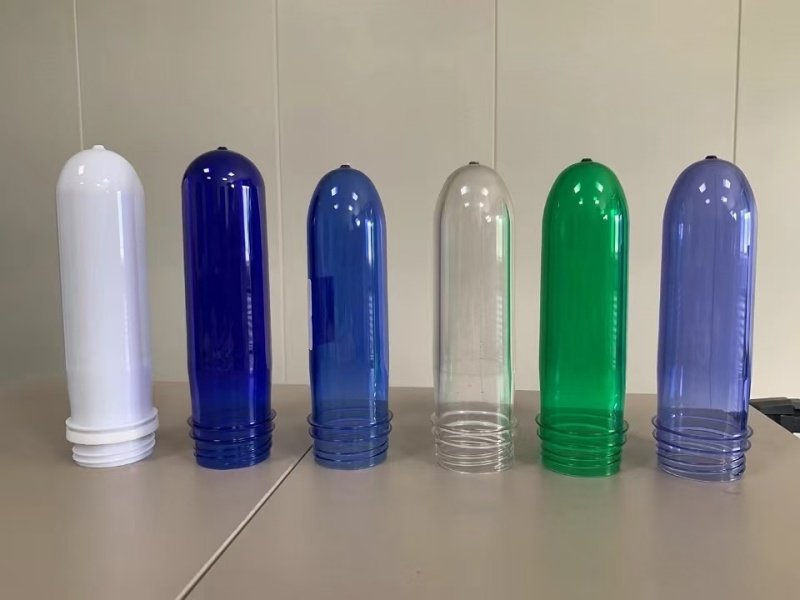
PET preform is the upstream stage of the bottle production chain. Made from Polyethylene Terephthalate (PET), a thermoplastic with outstanding toughness, it is injection-molded into tube-shaped pieces with threaded necks in various sizes and colors. Known for high dimensional accuracy and strong durability, and with options to adjust weight, neck diameter, and thread standards, PET preforms are a vital and hard-to-replace step in bottle production. Through heating, stretching, and blow molding, they become the transparent water bottles, beverage bottles, oil containers, and daily chemical packaging used worldwide.
How Are PET Preforms Manufactured?
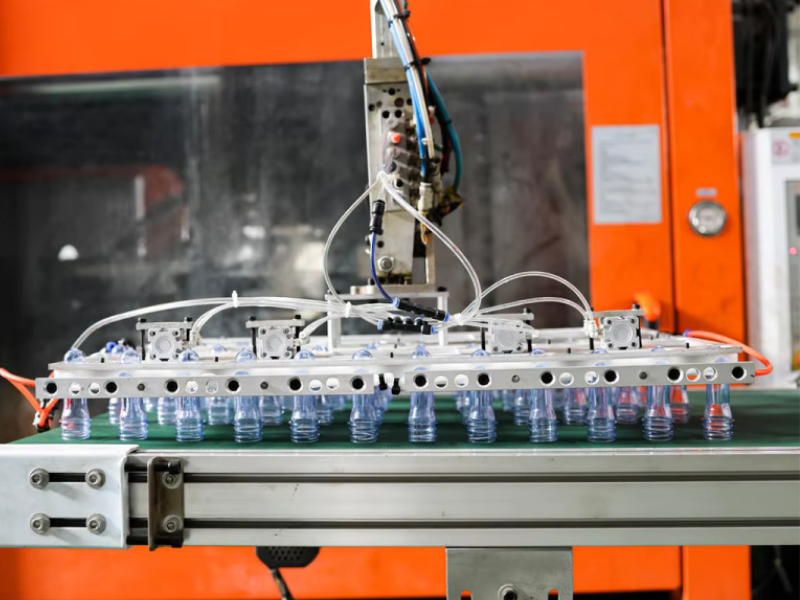
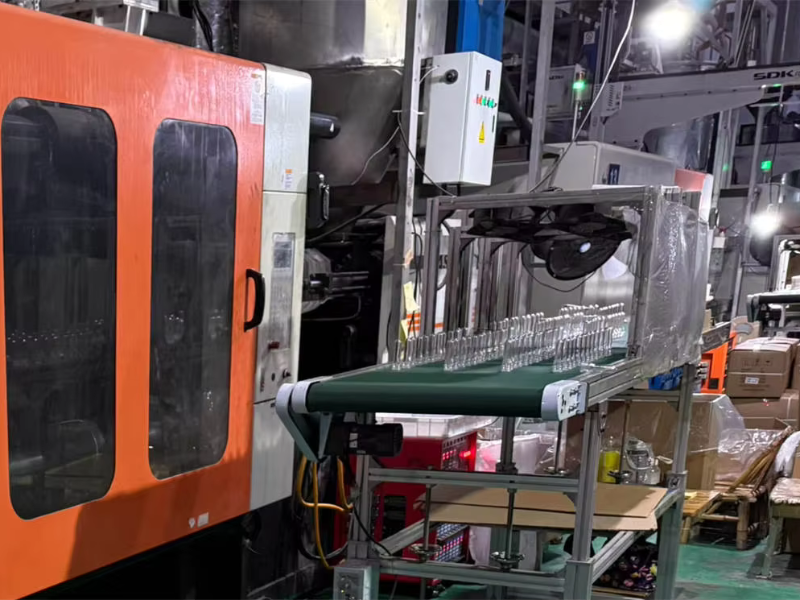
Before becoming a preform, PET appears as small transparent or milky-white pellets, much like grains of rice. These pellets are first dried to remove moisture, then carried through a line of equipment that includes dryers, injection molding machines, steel molds, and cooling systems.
So when the material is ready, the process continues smoothly into three key steps:
Step 1 – Melting the Resin
The dried pellets go into the injection molding machine, where heat melts them into a smooth liquid. Injection molding means melting plastic and then shaping it by pressing it into a mold. Melting is important because only when the resin flows evenly can the preform form correctly.
Maintaining the correct pet preform heating temperature during this stage is essential to ensure uniform resin flow, prevent defects, and achieve consistent molding quality.
Step 2 – Injection into the Mold
The molten PET is pushed with high pressure into a steel mold. The hollow space inside the mold, called a cavity, shapes the tube body and the threaded neck. The PET preform neck and thread are key because they decide how the bottle will later be sealed with a cap.
Step 3 – Cooling and Solidification
Right after injection, the mold cools the hot resin using cooling channels, which are small water pipes inside the mold. When the molten PET touches the cold walls, it hardens quickly into a solid preform. This fast cooling gives the preform strength and dimensional accuracy, making it ready for bottle production.
For a deeper understanding of each stage, we’ve prepared a detailed guide—explore the complete pet preform manufacturing process for more technical insights.
What Are the Key Features of PET Preforms?
After seeing how a preform is made, it is just as important to know what makes it valuable for your business. The following features directly affect bottle quality, production efficiency, and long-term costs.
Dimensional Accuracy and Standardized Neck
Preforms maintain tolerance within ±0.1 mm, keeping wall thickness and shape uniform. This avoids defects during blowing. Standardized neck finishes, such as 28 mm or 38 mm with threads and sealing rings, ensure bottles fit global capping systems and prevent leakage.
Customizable and Consistent Weight
You can choose weight to match bottle capacity, such as 18–20 g for a 550 ml water bottle. Consistency avoids thin walls that break or thick walls that waste resin. Preforms are designed with wall thickness distribution, keeping the neck rigid while the body stretches smoothly in blow molding.
Transparency, Purity, and Sealing
High transparency shows product clarity, which is critical for beverages and cosmetics. Pure resin avoids odor and discoloration. Smooth surfaces without scratches or bubbles protect brand image, while accurate threads provide a tight seal, keeping contents safe and fresh.
Lightweight Design and Storage Stability
Preforms are compact and lighter than bottles, saving storage and freight space. Once blown, bottles remain light yet strong, cutting transport costs. Their cylindrical shape makes them easy to stack on pallets, and they can be stored for 3–6 months without losing performance.
Recyclability and Sustainability
PET is fully recyclable, and many preforms include rPET (recycled PET). Using rPET reduces carbon footprint while keeping food-grade safety. This helps businesses meet environmental targets and consumer expectations while still using a durable, cost-efficient material.
Although PET preforms offer many advantages, you should be cautious of low-grade products. Some manufacturers add plasticizers or use materials containing BPA, which may cause safety and quality risks. At Enlightening Plast, we produce preforms only from 100% virgin PET, ensuring high gloss, superior clarity, and safe food-grade quality without cheap additives—this is why leading bottle makers across industries choose long-term cooperation with us.
How to Select the Right PET Preform for Your Business?
Now that you know the key features of a PET preform, the next step is choosing the right one for your needs. A poor choice may cause sealing issues, wasted resin, or even safety risks. To help you, here are eight practical checks you can use when evaluating preforms.
- Check color and surface: A good preform should look clear with no streaks or spots, the surface should be smooth, and it should show high gloss under light.
- Test for odor: Smell the preform directly, any strange odor often means poor resin or additives, which can affect both food safety and product acceptance.
- Neck stability: Place the preform upside down on a flat table. A stable stand means the neck is symmetrical and precise, ensuring tight sealing with caps.
- Review size tolerance: Ask for tolerance data. A reliable preform keeps length, neck height, and wall thickness within ±0.1 mm to avoid defects in blowing.
- Check weight consistency: Randomly weigh samples. Differences greater than 0.2 g can cause uneven walls, weak spots, or wasted resin during blow molding.
- Test hardness and strength: Squeeze or drop the preform. It should resist cracking or bending, showing durability for transport and later bottle production.
- Look for pet preform defects: Watch closely for scratches, bubbles, or sink marks. Even small flaws lower transparency and can harm your final packaging appeal.
- Confirm certifications: Reliable suppliers provide ISO, FDA, or EU 10/2011. These prove the preforms are safe for food and beverage use in global markets.
What Are PET Preforms Used For?
In the previous section, we noted that PET preforms are widely used for bottles and containers in water, beverages, oils, and daily chemical packaging. Now let’s break down the applications in more detail—you may find your business here.
Beverages: water, soft drinks, juices, sports drinks, functional beverages
Food and edible oils: cooking oils, sauces, condiments, vinegar
Cleaning and household chemicals: detergents, disinfectants, fabric softeners
Pharmaceuticals and personal care products: shampoo, lotion, cosmetics, liquid medicines
Industrial and agricultural packaging: fertilizers, pesticides, lubricants, chemical solutions
For a more in-depth overview of industry applications, explore our detailed article on pet preform uses to learn how different sectors benefit from PET packaging.
Partner with a Trusted PET Preform Manufacturer
Choosing the right PET preform is not just about technical detail—it shapes your product quality, cost efficiency, and brand reputation. By now, you know how preforms are made, what features define their performance, and where they serve across industries. The next step is finding a partner who can translate these insights into real supply chain value.
At Enlightening Plast, we don’t stop at meeting standards—we push beyond them. In line with global trends, we have optimized the 1881 preform weight to as low as 10 g, reducing resin use while keeping strength and sealing performance. This design innovation cuts transport costs, improves efficiency, and supports your sustainability goals without compromise.
If you are looking for a reliable PET preform supplier who delivers precision, food-grade safety, and forward-thinking solutions, it’s time to talk to us. Share your requirements today, and let’s create packaging that strengthens your business for the long term.